Eyes Right
Published: April 16, 2026
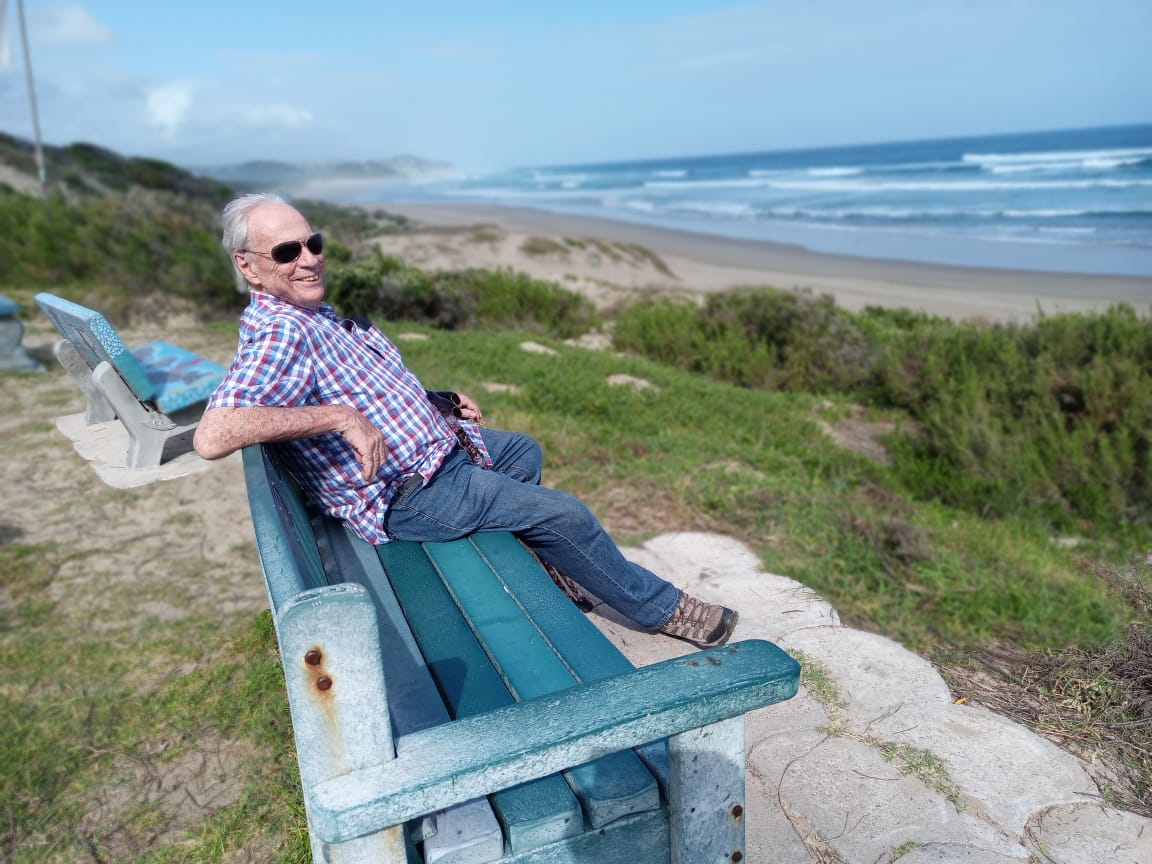
Slim
“We get there, and who the hell cares how.”
… was a saying of one of my teenage whodunnit heroes, Peter Cheney’s Irish sleuth, Slim Callaghan. It became a mantra throughout the years I spent in the quest to get cataracts removed by SA public health. Short story. It took six years.
What follows is a rear view mirror look at what passed for my life-long health care summary of Private vs Public medical care. Shortest possible conclusion: NHI has a case …
The Percentages
I had around 50% success from each of private and public health care. If I have to score my health care experiences as good vs botched, this is how it looks:
Private
| PROCEDURE | RESULT |
|---|---|
| Appendectomy | Partly botched |
| Duodenal Ulcers | Success, cured |
| Gout | Botched, then success |
| Hearing | Conserved, Aided |
| Hypertension | Nearly fatal |
| Pneumonia | Years late |
| Congestive Cardiac Failure | Totally botched |
| Cataracts | Unaffordable |
Public
| PROCEDURE | RESULT |
|---|---|
| Duodenal Ulcers | Success, cured again |
| Gout | Treated, controlled |
| Hearing | Partly botched |
| Lumbar Compression | Partly botched |
| Cataracts | Six years, ok |
The Score
As you can see from the tables, the quality of experience with both private and public health has been varied.
In my twenties, I was ejected from the corporate world (for being a ‘communist agitator’. I wasn’t either, but they gave me an idea).
Fresh in the gutter, and instantly lost to the world of ‘sick notes’ and medical aid forever, I knew I could not afford doctors, nor could I afford public health care. I could not afford the money for private doctors, and I could not afford the time for public health care. Nowhere outside of health care is it more true that time is money. Public health care can be summed up as
“wait half a day for a doctor to tell you what you told the doctor: that you have flu”.
That half day skull and crossbones had dangerous text stencilled in capitals across its forehead:
“Missed income”.
Hence, I could not afford public health care.
My Stratagem
Medical Aid markets on fear-mongering. Scare them into buying. The scare-mongers are right. Things can happen, and they can ruin one financially. Better to set some money aside for those pandemicy days.
My hand, though, was forced. With no reasonable prospect of getting re-employed, I had to do my sums. My employers gave me four generous increases in a year, promoted me to manangement, and then dumped me for being a ‘communist agitator’. At that time, medical aid contributions stood at 10% of my gross pay (5% each by me and the company). It is a tithe, a stokvel.
It was a little hard to understand. I had been brought up to save money for the rainy and sick days. ‘Medical Aid’ was a mystery, a new thing to me, just more corporate mumbo-jumbo. I concluded that somewhere down the line, savings went out of fashion. In time, I realised that people saved Because They Could, and then didn’t Because They Couldn’t.
Every second podcast these days is about the rich transferring wealth from our pockets to theirs. Sticking to my own facts, when I became a werkelose I could not even find any such thing as a private or individual medical aid. There was no such thing. They did come along eventually, but they were too expensive. Like all insurances, they insure those who don’t need it.
My strategem was flatly simple:
Stay out of hospital, avoid doctors at (literally) all cost, until 65. After that, health care is free.
It was a success. For forty years, from twenty to sixty, I hardly saw a doctor. When I became a musician, I already knew the First Law of Small Bands:
Musicians can’t get sick.
In big bands or orchestras, where reading was the thing, it didn’t matter. We simply booked a ‘dep’ (someone to deputise for us). S/he was a functionary, just had to read, play and leave.
Jazz deps are ok too, because jazz is not rehearsal-paralysed. Jazzers all know what they are doing. They just pitch up and play. There is very little discussion, a great deal of osmosis, anticipation and even some cliché, but jazz performers do not disgrace themselves due to lack of rehearsal: if they do disgrace themselves it’s usually vegetable, sometimes animal, never mineral.
In small, rehearsed, non-reading bands (’ear-players’), it was all about rehearsal. I have been in bands that rehearse a single phrase twenty times. To a jazzer, that is crazy: just get the blankety-blank thing right. In these small bands, “depping” was very challenging. You might get a few chords scrawled on a crumpled piece of paper, if you were lucky. Most often, the pianist says “just watch my left hand”. That’s fine for the bassist standing next to him, but you can’t have everyone gathered around gawking at the pianist’s sinistra. Not everyone in those bands even knew what they were looking at. However, since a lot of small gig band work was ‘covering’ music heard on the radio, most deps had learnt a song (for ‘I know it’, read “I have heard it’) by ear. Working in a four piece is nowhere to hide! It can be hard for a newbie.
So, as per The First Law of Small Bands, if you could stand, you climbed onstage. In a half century of performing, I lost a single solitary performance to sickness. “If you can stand” did not apply. If I could have stood, I would have, but I had “taken the count”. The other thing was, if you don’t get up there, you don’t get paid: what is now rather grandly called ’the gig economy’. Like ‘suck’, ‘gig’ was a musicians’ word. Everyone apes us.
Shout-outs
Small town and rural clinics win hands down for cheerful, helpful care. The experience is overwhelmingly positive, willing and caring. But ’local can only be so lekker’ No matter whether one goes private or public, small clinics are effectively almost ‘medicine-only’. There are ‘doctor days’ but stitches, fractures and serious illness gets one sent to a bigger centre. I have really fond memories of care received in Touwsranten (Hoekwil) and Sedgefield, where I am now. As for hospitals, I imagine George Hospital is as good as they get.
Big hospitals on the Reef have had a really bad rap in the media. Helen Joseph Hospital is a huge, old, tatty apartheid-era edifice, and it is a mystery how it functions. Ghandi was rumoured to have said
Good systems are not enough. You need good people, too.
HJH must have a good share of good people, because it is frantically busy and no systems are in evidence. Well, I say ‘busy’, but once again, the percentages apply. A lot of the clinics (not the wards, they are constantly busy) descend into dingy silence after lunch. They work for little more than 50% of the day. If there is one thing I can’t forget or forgive about Helen Joseph, it is lack of leadership. The whole place outside of the hospital wards has become a ‘half-day’ show. I wonder whether Mr Motsoaledi knows what his staff are doing after 2pm. I suspect they are profitably moonlighting. He needs to be sure that his nursing staff are not selling (discarded?) medication for a side-hustle. Now, there is something to investigate.
Still, HJH does deserve some sort of shoutout. Despite being overwhelmingly rudderless, lacking in visible direction, it still functions for thousands of people daily, and that has to be thanks to good people. We know about the bad ones, but those who excel deserve credit. They are ‘in the trenches’. I did emerge from HJH every time with some relief, because of one simple thing: you can cut the doctor-nurse atmosphere with a knife (no scalpel needed). They hate one another, and the entire nursing staff are clearly constantly in terror of losing their jobs. I got the feeling that is not from hatchet-job leadership, but rather from peer-to-peer back-stabbing, but I don’t really know. If you ask, you get tightly sealed lips.
It is a massive building. For all its faults, it keeps running, and the surgery I had, even though it took them two attempts, returned most of my quality of life. The hospital looked as though my scary “Patient O’Higgins’s Last Op” fears on admission were justified, but I survived and have flourished. Admittedly it was Tough Love. But talent must lurk there, or it would crash.
Their computer recording is vestigial, the place has hundreds of PCs throughout, spotless, locked in steel mesh cages, but unused. We were, however, far away in Hoekwil, able to find records of a HJH procedure. Was “the growth” malignant? “No” said the doctor. “If they reported nothing, there was nothing to report”. I don’t know about you, but I like people to say, definitely that nothing bad was found.
The food for the first week of my HJH recuperation was truly tragic. I just drank water, and that was one of the hardest things to get!
“Ask your visitors to bring water” said the sister, when I asked (croaked) why the nurses didn’t.
The thing is, aged, and with no family in Jhb, I had one visitor only in three weeks. People have lives, Johburg is dangerous. Every time you leave home, you may never return. I would not have wanted them to visit. My sole visitor did indeed bring water.
Another strangeness was cellphones. I was afraid mine would be stolen, but I was warned my hearing aids would be. The stress was hard to bear. The phone wasn’t stolen, but I was terribly frail, & for some days, could not reach the plug to get it charged. Yet, a few times, as a nurse came on duty, she would routinely unplug my phone, to charge hers. She was tigtht-lipped when challenged. Once, she said “I need my phone!”, and walked out. She was not even working in my ward.
Last word on the “food”: nothing less than a ninja sword would have cut that boerewors, and the plastic knife broke on the mieliepap. A week in, that (bakkie brigade?) caterer was fired, and I returned to a mouthful here, a mouthful there.
No Shout-out
By contrast, the so-called District Six Community Day Clinic in Cape Town was literally a waste of time. After spending from 07h30 until 17h30 there I remained untreated, unseen, and was turfed out by a cleaner, who kindly suggested “maybe come tomorrow”. Now for the kicker. This happened TWICE. I left after lunch the second time. Getting up at 5am to not be seen by lunch time is a disgrace, anywhere in the world.
Early, the first time I arrived there, a man told me proudly
‘Not on’y whites got systems. We got systems too.’
He was right. They had systems, but theirs were plain dof. An old saying comes to mind:
It is better to be thought a fool, than to open your mouth and remove all doubt.
Timing and Sense
It took less time for me to get R175k worth of spine surgery, plus all the other treatments (gastroscopy, colonoscopy included) than it took to get R40-100k worth of cataract removal.
Note the “R40-100k” price of cataract procedures. One eye clinic in the Garden Route asked R20k per eye, the other R50 per eye. Hence R40k or R100 for two. The thing is: a doctor claimed conversationally that the same
- theatres
- technolology
- devices
are shared by both public and private practitioners. I got my eyes done on the same bed, in the same room, using the same machine, as I would have by paying a private clinic either R40k or R100k.
Careful, medical profession! If my doctor informant was correct, you are playing right into the minister’s NHI hands.
Eyes
Restoring my vision took six years via public health. Still a blessing. I would have had to crowdfund for private treatment. But the strangeness is, the total time taken by all surgery to my eyes was 1 1/2 hours. It seems weird to wait six years for that.
Sadly, the spectacles I got from pubic health were unusable: vision with them was worse than without.
Ears
The hearing clinic staff at HJH were a delight. One lady there remains to be one of only two in public health who actually took the trouble to phone me, for any reason (and they were both hearing aid people). That is care. In the event, one of the hearing aids I got lasted only one week. I left Johburg soon after getting them, too late to get back to her for a replacement. Getting one in the WC has taken 3 years. The first attempt resulted in (after three months) the practioner, when I phoned after no news, telling me “there is no money”. Strangely, not long after that, she phoned me again, and I got my replacement. New financial year? Maybe.
No matter how grateful I am, I have to say this: neither of the public health devices is technologically even close the level of the hearing aids my son bought for me from a private practitioner 15 years ago in Cape Town, and neither works even close to as well.
I do not understand public health priorities. In my seventies, being partly blind caused me to constantly stumble and trip, which could have led to broken limbs, and being deaf and blind nearly got me run over a few times. Delays of years for the two treatments that took the fewest hours of all just makes no sense.
There is a lot on YouTube about China. I like this young lady’s frank account of a visit to hospital: it is worth watching just to discover how long she took.